Quantitative Research
What is Quantitative Research?
When we need to measure attitudes towards products or brands with a high degree of certainty, or establish the size of a trend, we use quantitative research to identify needs and motivations. It allows us understand customers, buyers, and markets in a strategic way and drive action.
We consider three core principles of B2B quantitative research:

Confidence & Reliability

Actionable & Insightful

The Right Audience is Key
Trusted Research Partner for Top B2B Brands






Why Partner with B2B International for Quantitative Research?
At B2B International, we cover the full range of B2B quantitative research methods. Our researchers are skilled at collecting data from senior individuals, extracting insights, and driving action for our clients.
We select quantitative research methods based on research objectives and target audience. Using careful recruitment and stringent quality controls, quantitative sample sizes are achieved utilizing a variety of approaches which are detailed below.

Custom-Built Projects

Access to Senior Decision Makers

Action-Oriented Data Analysis
Speak to One of Our Quantitative Research Experts
Want to discuss how B2B quantitative research could benefit your business? Get in touch to schedule an introductory call with one of our team.
Contact UsComputer Assisted Telephone Interviews (CATI)
Telephone interviews with senior decision-makers carried out by our in-house CATI team or by one of our trusted partners. Perfect for persuading niche audiences to participate, creating an engaging and personal respondent experience.
Online/Mobile Surveys
Online self-completion questionnaires. Ideal approach for pricing and ad testing surveys where visual stimulus needs to be shared with respondents.
Hybrid Solutions
Using a mixture of approaches to maximize success. This can be simply offering a choice of telephone or online, for audiences where flexibility is key, or using Recruit to Web (recruiting by telephone and sharing a link to an online questionnaire) where an online approach is needed for a particularly challenging audience.
Strategic Frameworks
To extract true meanings behind answers, we use a vast range of strategic frameworks to distil findings and drive action, including:
Segmentation: Revealing customer types/personas based on common needs/behaviors.
Price and Product Modelling: Identifying the perfect blend of product features or creating a price elasticity model to predict the ideal pricing strategy.
Driver Analysis: Exploring what drives perception and decision-making using a range of tools, from simple correlation to regression and decision trees.
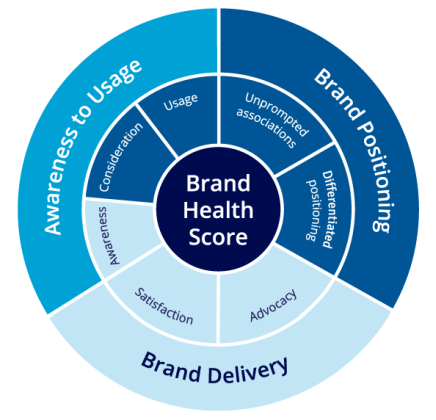
Brand Health: Visualizing brand positioning using funnels, brand health wheels, and perception maps.
B2B Quantitative Research Applications
B2B quantitative research can address any business question which requires robust measurement. It can be a stand-alone project, an ongoing tracking survey, or be combined with a quantitative stage to get a deeper understanding. Key applications include:

A global brand health tracking study to inform EcoVadis’ brand building and marketing communications
Business Challenge
EcoVadis is a purpose-driven organization with a mission to provide reliable, globally recognized business sustainability ratings and insights that enable companies to reduce risk, drive improvement, and accelerate positive impact on our planet and society. Hundreds of thousands of companies worldwide partner with EcoVadis to assess their network and monitor sustainability performance.
EcoVadis was therefore seeking a brand and marketing strategy to:
- Raise awareness of EcoVadis’ mission, services, and solutions among supplier companies;
- Differentiate EcoVadis from other ratings agencies and sustainability assessment providers;
- Demonstrate the benefits, both social and business related, of suppliers engaging with EcoVadis.
To inform its brand building strategy, EcoVadis required a baseline understanding around its own brand health (particularly related to awareness and perceptions) among prospective Rated customers relative to other providers so that the company could effectively measure and monitor progress over time.
What We Did
EcoVadis partnered with B2B International to conduct a comprehensive global brand health tracking program. The research covered more than 800 ESG decision makers at companies that fit the profile of a Rated prospect spanning various industries in select global markets such as the US, Germany, France, and Japan.
The B2B International and EcoVadis teams collaborated to identify key performance metrics and decision drivers that would provide EcoVadis with a baseline view of its current brand health as well as how to increase the appeal of sustainability ratings to prospective companies.
B2B International tailored its proprietary brand health wheel to fit the strategic objectives of EcoVadis creating a visual snapshot of EcoVadis’ brand health which included:
- Brand Health Metrics: Awareness, consideration, and usage of EcoVadis and its core competitors.
- Brand Perception Metrics: Unprompted associations, strategic attributes (attributes aligned with EcoVadis’ desired brand strategy), market attributes (attributes aligned with what is important to the market).
Featured Content on B2B Quantitative Research
To learn more about quantitative research, check out the following resources:






Further Insights on B2B Research Methods

AI Is No Longer a Differentiator: 3 Takeaways from Quirk’s London

5 Market Research Predictions for 2026: Why the “Human + Tech” Era Matters More Than Ever

Why You Should Think Twice Before Updating Survey Questions in Tracking Studies

3 Top Tips for Getting Questionnaire Wording Right

How To Avoid Jargon Creeping into Your Research Project