In complex B2B markets, understanding how customers perceive your brand versus competitors is critical. Multidimensional Scaling (MDS) is a proven statistical technique that helps visualize these perceptions, turning raw data into actionable insights for brand positioning, segmentation, and strategy development.
Multidimensional Scaling (MDS): A Strategic Tool for B2B Market Research
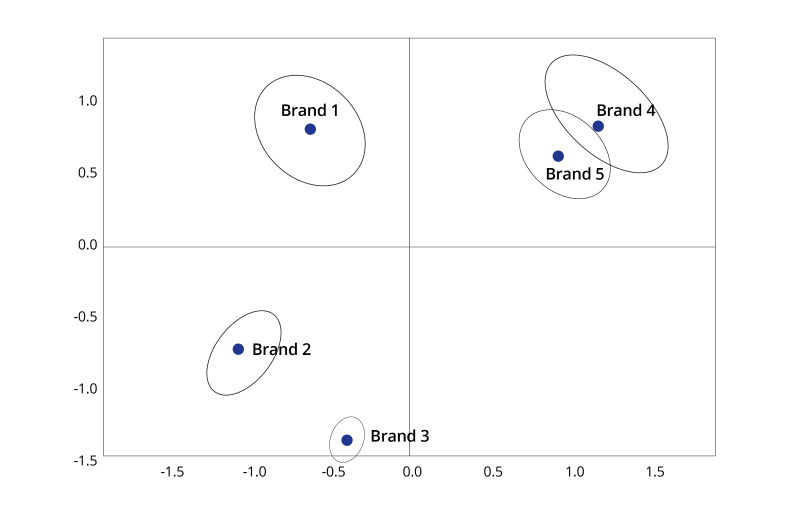
Multidimensional Scaling (MDS) creates a perceptual map that shows the relative positioning of brands, products, or services based on customer perceptions. Instead of relying on assumptions, MDS uses real similarity or dissimilarity data to uncover the dimensions that matter most to decision-makers.
For B2B organizations, where purchase decisions are complex and involve multiple stakeholders, MDS provides clarity on how your brand is viewed in the marketplace.
Why is MDS Valuable for B2B Market Research?
B2B buyers often claim that suppliers feel “similar,” but MDS reveals the truth behind these perceptions. For example:
- A manufacturer wants to understand how its technical service compares to competitors.
- Buyers rate the similarity of suppliers based on attributes like quality, innovation, and price.
- MDS translates these ratings into a visual map, showing clusters of competitors and highlighting areas of differentiation.
This insight helps businesses identify competitive threats, spot opportunities for differentiation, and align marketing strategies with customer perceptions.
How Does Multidimensional Scaling Work?
-
Gather Perception Data
Respondents compare pairs of brands or products and rate their similarity.
-
Apply MDS Analysis
The algorithm converts these ratings into a spatial map where distance equals perceived difference.
-
Interpret Strategic Dimensions
The map often reveals underlying factors – such as service quality, technical expertise, or price sensitivity – that drive choice in B2B markets.
Key Benefits for B2B Companies
- Visualize Market Positioning: See where your brand stands relative to competitors.
- Drive Differentiation: Identify gaps and opportunities to stand out.
- Support Strategic Decisions: Base positioning and messaging on real customer perceptions.
Applications in B2B Market Research
- Brand Health Studies: Understand competitive positioning.
- Customer Segmentation: Identify natural clusters of needs and preferences.
- Product Development: Spot unmet needs and innovation opportunities.