


What you cover in value proposition research depends, in part, on how developed your proposition already is. Creating something entirely new will naturally feel like a broader exercise than testing refinements to an existing product or service.
The temptation is to include everything. After all, if you’re investing in research, why not leave no stone unturned?
In reality, this approach rarely delivers the best outcome. Rather than generating deep insight into the issues that matter most, it often results in a superficial understanding of many topics and not enough evidence to make confident decisions about your proposition.
In 2025, B2B International partnered with a leading educational publisher on a research program designed to support the development of an integrated service proposition. While our client already had an established offer across some service areas, others were less mature.
The objective was to understand audience needs, expectations and behaviors within these less familiar markets, while assessing appetite for a bundled proposition that combined multiple services into a single offering.
As with many proposition development projects, one of the biggest challenges was balancing the desire to learn everything with the need to generate insight that could support clear business decisions.
So, how can businesses ensure their value proposition research is set up for success?
Use Desk Research As Part Of The Toolkit
A useful starting point is to list all the topics you want to understand and then determine which require primary research and which can be explored through existing sources.
Topics such as market trends, competitor activity, industry developments and market share can often be investigated through desk research. While some of these insights may later be validated through primary research, existing information can provide valuable context and help preserve questionnaire space for areas where direct customer feedback is essential.
We followed this approach with our client. During the project design phase, we conducted desk research to identify key trends across a range of markets. This helped us narrow down the markets that warranted primary research by highlighting those that appeared to offer the greatest opportunity based on current demand and usage of similar solutions.
By combining desk research with audience insight, we were able to focus the primary research on the questions that mattered most.
Define What You Don’t Need To Know, Not Just What You Do Need To Know
This can be one of the hardest parts of planning research. How do you decide what is important before you’ve gathered any evidence?
The answer lies in understanding where you are in the proposition development process.
For example, if you’re still exploring audience needs and identifying potential proposition territory, there is little value in spending significant time testing pricing assumptions. At that stage, your proposition may evolve substantially as new insight emerges.
Equally, if your proposition is already well defined and you’re evaluating a small number of new features, there may be little benefit in revisiting foundational questions you’ve previously answered with confidence.
For our recent project, we held a dedicated workshop before questionnaire design. This gave stakeholders the opportunity to discuss priorities and align on the decisions the research needed to support.
Unsurprisingly, there were plenty of ideas for additional questions. However, every topic was assessed against a simple principle: do we need this information now to make an informed decision, or can it wait until a later stage?
This discipline helped ensure the research remained focused, actionable and aligned to business objectives.
Consider Different Types Of Decision-Makers
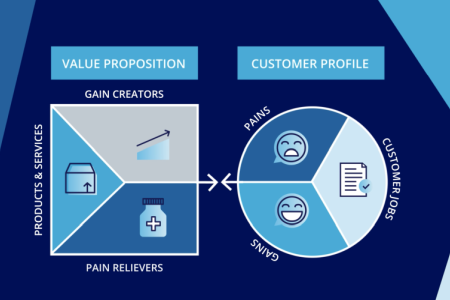
One reason proposition research can become so challenging is that B2B buying decisions rarely involve a single individual. A proposition that resonates with one stakeholder may fall flat with another, making it essential to understand not only what buyers value, but how those priorities differ across the wider decision-making unit.
In fact, buying groups continue to grow in size and complexity. The 2024 Superpowers Index found that the average B2B buying group now involves 7.4 decision-makers, while the 2025 Superpowers Index showed buyers are considering 13% more brands during the selection process than they were a year ago. Together, these trends point to increasingly complex purchasing journeys, with more voices, more scrutiny and more internal consensus-building required before a decision can be made.
This complexity has important implications for proposition development. Different stakeholders often have different priorities, concerns and definitions of value. A proposition that resonates strongly with a procurement lead may not address the needs of operational users, while senior decision-makers may be focused on strategic outcomes that matter less to those responsible for implementation.
Your value proposition research should therefore account for the wider buying ecosystem. Consider which job roles are likely to influence the decision and what each needs from a supplier. Ask yourself:
- Who influences the decision?
- Who controls the budget?
- Who will be responsible for implementation?
- Whose support is needed for the proposition to succeed?
In our recent research, we included two types of decision-maker and tailored the discussion guide accordingly.
For management stakeholders, questions focused on procurement processes, purchasing behavior and payment preferences.
For operational stakeholders, the emphasis was on implementation, day-to-day use and the features that would create the greatest value for end users.
This approach delivered a more complete understanding of how the proposition would be evaluated across the buying group and where different stakeholder needs aligned or diverged.

Final Thoughts
Value proposition research should not be treated as a broad information-gathering exercise. Its purpose is to support better business decisions.
The most effective projects are tightly focused on the choices that need to be made next. They use desk research to maximize efficiency, remain disciplined about what sits outside scope, and recognize that modern B2B buying decisions involve multiple stakeholders with different priorities.
When done well, value proposition research delivers more than market understanding. It provides the confidence and clarity needed to build, refine and validate propositions that resonate with buyers and create competitive advantage.
The biggest risk in value proposition research isn’t asking too few questions. It’s asking too many and failing to generate the clarity needed to make a decision. The most effective research programs focus relentlessly on the insight required to move forward with confidence.
If you’re looking to develop, refine, or validate your value proposition, the experts at B2B International can help. Get in touch to discuss how tailored research can provide the insight and confidence needed to make smarter proposition decisions.
Readers of this article also viewed:
How to Build B2B Propositions That Actually Win in Market Trust Remains the #1 Driver of B2B Choice – Here’s What That Really Means What It Really Takes to Achieve Premium Positioning in B2B FAQ: What is the Value Proposition Canvas? Using the Kano Classification Model to Quantify the Importance of Product Features and Attributes Pricing: The Most Overlooked Growth Lever in the Marketing Mix B2B Insights Podcast #64: The Best Frameworks to Develop Winning Propositions Introducing the RIVR Pricing Model The Value Equivalence Framework: A Simple but Powerful Questioning Technique 3 Use Cases for Kotler’s Five Product Levels Framework in B2B Research Using the Push-Pull Model to Successfully Bring New Products to Market
To discuss how our tailored insights programs can help solve your specific business challenges, get in touch and one of the team will be happy to help.