«      »

Could Neuroscience be a New Research Method?


Post to Twitter Post to Facebook Post to LinkedIn

 
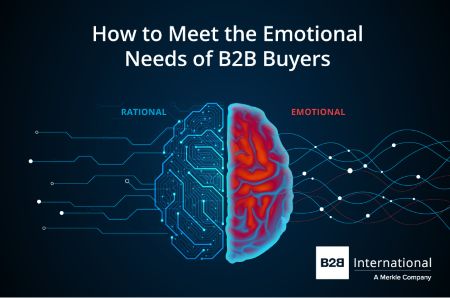
The Holy Grail for the market researcher is to find out what people really are thinking. When we ask people in interviews what is the importance of a brand, or how much they value a trustworthy supplier, we can’t always believe we have got the right answer. Throughout our education we are taught to think rationally and therefore when we are asked questions in a market research survey, we are likely to answer rationally. This means that we are in danger of overstating the importance of the rational factors such as price and technical performance at the expense of the emotional factors such as appearance, imagery, brand and the like. For this reason our attention was grabbed by an article in the Financial Times this week which scarily tells us that scientists are close to being able to tap into our innermost thoughts by putting on our heads a red bathing cap with wires attached. Apparently without asking any questions, they can work out what emotions are most successful in persuading us to take action. Read on…


Why marketing minds have turned their heads to mind-reading

By Hannah Kuchler
Financial Times April 12 2010 03:00

Last month, I surrendered my subconscious to analysis. A red swimming cap was stretched over my head, long grey wires stuck to my skull and my innermost thoughts fed into a computer as I nervously watched an advertisement for Volkswagen.

In turn, the computer told a team of researchers which scenes I paid attention to, what I responded to emotionally and what I would go away remembering.

It was a far cry from the marketing industry’s traditional method of finding out what consumers think about their brands: asking them.

The problem is, when gathered in traditional focus groups, respondents can be swayed by those sitting next to them or by the presence of researchers. Alternatively, they may be unable to articulate their responses accurately. As a result, a rising number of marketers now prefer to analyse the response of peoples’ brainwaves to brands and advertisements by using the latest developments in neuroscience.

In recent months, these techniques have not just been applied to the marketing of finished products, but also to product development. “It’s about uncovering new undiscovered needs,” says Martin Lindstrom, author of Buyology , who has been studying the development of neuromarketing since its inception seven years ago. “A lot of manufacturers are struggling as it’s easy to come up with ideas consumers don’t feel they need.”

He cites the example of dishwasher tablets. Consumers are attracted to tablets embedded with a blue ball because, subconsciously, they believe they clean better. However, when asked in the context of traditional marketing methods, they claim no preference about colour.

“The main reason why [traditional market research often] fails is that we look at things from a conscious point of view,” says Mr Lindstrom. “We ask: ‘Do you like the brand?’ We ask the consumer to be incredibly rational and we know today from neuroscience that 85 per cent of the decisions we make are made by the unconscious part of brain.”

Neuromarketers believe their work will be especially useful for products consumers find hard to describe – particularly when they need to know consumers’ reactions to smell, taste and touch.

According to Neurofocus, the global market leader in neurological testing, consumer goods companies are even creating their own in-house testing units that mock up supermarkets. They can use them to change everything from shelf positioning to point-of-sale advertisements with the flick of a switch and monitor the shopper’s brain during the few seconds it takes to select a product.

Professor Gemma Calvert, co-founder of UK-based Neurosense, believes the future for neuroscience lies beyond products: “I see the spread of these tools into things like the financial sector - to understand how trust is built and broken down for the banks – how do you make us feel safe and secure?”

Anantha Pradeep, Neurofocus’s chief executive, believes the possibilities for neuroscience are almost limitless: “The challenge for us is to be focused because we could use it in any area of life which needs emotion and persuasion.”

But some advertisers fear this adherence to science could stamp out “light bulb” ideas and destroy creativity in the industry.

Neurofocus argues that mind-reading actually helps sell original thinking to companies that would otherwise stick with tried-and-tested methods.

“The principles [of neuroscience] are like the keys of a grand piano – you can do a lot with them,” says Mr Pradeep. “And we’re adding keys all the time.”

Perhaps a larger concern is that consumers will find it increasingly difficult to resist the pressure to buy.

“We believe we’re incredibly clever, but in reality we’re less and less immune,” says Mr Lindstrom. “There’s an urgent need to create ethical guidelines. It’s like a hammer: it can be used to put a beautiful painting on the wall or to hit someone on the head.”


This entry was posted on Monday, April 19th, 2010 at 10:25 am and is filed under Customer Insight, Financial Services, Focus Groups, Market Research, Research Methods. You can follow any responses to this entry through the RSS 2.0 feed. You can leave a response, or trackback from your own site.


Leave a Reply